



insurance
Auto Insurance Survey: Dedicated Field Research
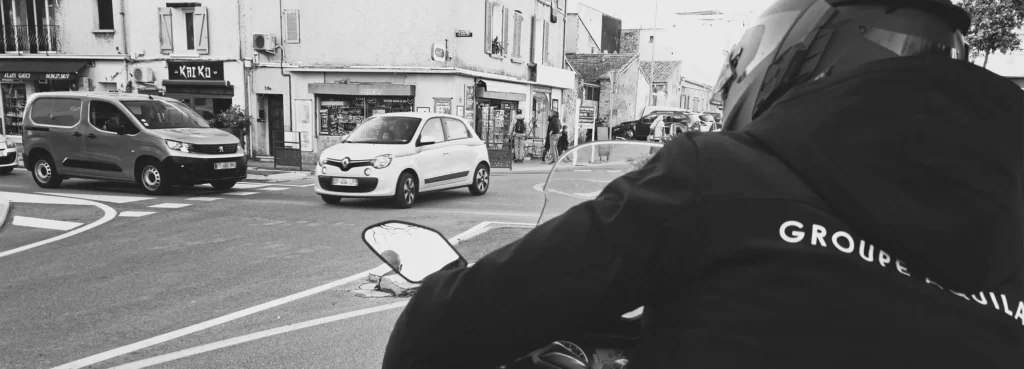
When a car accident raises questions
A car insurance claim may contain inconsistencies that warrant a thorough investigation. Unplausible circumstances, contradictory witness statements, a history of repeated claims, and late filing: there are many red flags, but they are difficult to objectively assess from a claims office.
The claims adjuster then has a strict deadline to decide how to proceed. Rejecting a claim without sufficient evidence exposes the company to litigation. Paying without verifying the facts exposes the company to an avoidable loss. This is precisely where an on-site investigation is essential: it transforms a suspicion into a factual finding or definitively dispels any doubt.
The Aquila Group’s Insurance Investigation Division handles all types of passenger vehicle claims: collisions with or without an identified third party, staged thefts, fraudulent claims, over-reporting, and claims involving pre-existing damage. Each case is investigated in a manner tailored to its specific circumstances.
Typical warning signs
in an auto loan application
- Late reporting of the claim, without justification for the delay.
- Accident report filled out incorrectly; sketch does not match the photographed damage.
- Unknown or unidentifiable liable third party; no witness statements available.
- Damage inconsistent with the described scenario (point of impact, height, skid marks).
- A history of repeated claims involving the vehicle or the insured.
- Over-reporting of equipment or valuables believed to be in the vehicle.
- Purchasing a relatively new vehicle, especially if it has high mileage.
What the survey includes
car insurance
Our services cover all the necessary verifications to confirm the accuracy of the reported facts. Each step of the process is documented to ensure the probative value of the final report submitted to the manager.
Reconstruction of the circumstances at the scene of the incident, with geotagged and dated photographs.
Search for and interview direct or indirect witnesses to the event, including those in the immediate vicinity.
Verification of the insured person’s statements based on physical evidence and cross-checking of documents.
Check the vehicle’s and driver’s history (accident history, previous registrations, previous owners).
Analysis of inconsistencies between the statement, the accident report, and the factual details noted.
Identification of any possible collusion, false testimony, or organized fraudulent schemes.
Verification of actual possession of the claimed accessories and equipment at the time of the incident.
All findings are compiled into a detailed report, personally drafted by Victor de Villeblanche, the division director, and submitted to the manager within a maximum of two weeks.
ANONYMIZED CASE STUDY
Car vs. motorcycle collision
gradation applied
Car accident resulting in bodily injury in an urban area: a collision between a sedan and a motorcycle driven by a minor, who was transported to the hospital. Two years later, the plaintiff’s counsel filed a claim with the civil court seeking six-figure advance payments. The law firm applies its tiered fee structure. LEVEL 1 — OSINT: The Google Street View images cited by counsel are compared with actual views of the location described in the fire department’s report; they show a different intersection. LEVEL 2 — Documentary evidence: A discrepancy is identified between the documents regarding the nature of the two-wheeler (a 250 cm³ motocross bike without a license plate versus a registered 50 cm³ moped). LEVEL 3 — Official Agencies: Contact with the police station regarding the status of the criminal proceedings. LEVEL 4 — Remote interviews: collection via written submission of three consistent statements under Article 202 of the Code of Criminal Procedure (driver, passenger-witness, and fire department unit commander who was the first responder). LEVEL 5 — Field investigation: visit to the scene with the actual driver, on-site interview, time-stamped photographs documenting the absence of the sign in question, the presence of a traffic light, and a “yield to the right” sign. LEVEL 6 (surveillance/tailing): not conducted—levels 1 through 5 were sufficient. The “witness” presented by the petitioner turned out to be the brother of the motorcycle driver.
The Process of a Vehicle Investigation
Our five-step methodology ensures the rigor and acceptability of the deliverable. Each step draws on specific expertise and produces documented outputs.
01
Reception
Receipt of the engagement letter along with the case files: accident report, the insured’s statement, photographs, vehicle inspection report, and insurance policy.
02
Instruction
Internal investigation within two business days and identification of priority areas for review based on the warning signs detected.
03
Deployment
Field deployment coordinated by the regional agency: travel to the scene of the incident, observations, interviews with identified witnesses, and search for additional witnesses.
04
Operation
Analysis of the collected information: comparison with initial statements, classification of discrepancies, and verification of the internal consistency of the insured’s account.
05
Restitution
Delivery within two weeks at most, including a detailed report, time-stamped photographic evidence, and transcripts of interviews—all admissible in court.
Our five-step survey methodology is detailed on the dedicated page.
Why entrust your investigation
automotive company within the Aquila Group?
The Aquila Group’s Insurance Investigation Division is headed by Victor de Villeblanche, a private investigator since 2012 who holds a law degree. He personally drafts all reports submitted to insurance companies, ensuring editorial consistency and analytical coherence from one case to the next.
Our firm is AFNOR pre-certified, affiliated with ALFA, and operates through an integrated national network covering five regions without subcontracting. This structure ensures consistent service quality throughout the country and the confidentiality of case files, which never leave the premises of the contracting firm.
In auto accident claims, the speed of on-site response is often critical: physical evidence deteriorates, vehicles are moved or repaired, and witnesses move away. Our integrated regional network allows us to respond quickly anywhere in metropolitan France.
- 232 cases processed and a documented success rate of 98% across the division.
- AFNOR pre-certification and ALFA membership for industry methodological standards.
- Return deadline: no later than two weeks after the complete set of documents has been submitted.
- Report written personally by Victor de Villeblanche, director of the division.
- Integrated national network: 5 regions, 20 branches, no outsourcing.
ALFA—the Agency for the Fight Against Insurance Fraud—oversees the standards for property and casualty insurance investigations.
To contact the firm regarding an automotive case, please use our contact form for case managers.
no obligation
Request your free quote
Frequently Asked Questions
A maximum of two weeks between receipt of the complete file and submission of the report. For urgent cases—such as those nearing the statute of limitations or with a scheduled hearing—priority processing may be arranged upon the case manager’s explicit request.
All claims showing signs of inconsistency: collisions where the other party cannot be identified, suspicious thefts, repeated claims, late reports, conflicting witness statements, or simply circumstantial doubts on the part of the claims adjuster. The financial threshold is not the only criterion.
Yes, in strict compliance with the legal framework. Observations and interviews are conducted without disclosing the mission, unless otherwise instructed by the client company. Discretion is an operational requirement.
Yes. The Aquila Group’s reports comply with the requirements of case law regarding the fairness of evidence. They have been successfully presented in civil and criminal courts.
By phone or email to the assigned manager. Once approval is granted, the company will send the engagement letter along with the case files. No prior estimate is required for partner companies.
Check out all our insurance claims sections



Be sure to check out our section on TSCM detection – Electronic dust removal for the detection of bugs and cameras, as well as ourOSINT digital investigation.