



insurance
5-Step Insurance Investigation Methodology
Why a Formalized Methodology ?
An insurance investigation is only valuable if its methodology stands up to scrutiny. A report submitted to the court is carefully reviewed by the insured’s legal counsel: even the slightest procedural flaw can result in its exclusion from the proceedings. That is why the Aquila Group has formalized a five-step methodology that every case follows without exception.
This structure is not merely an administrative formality: it serves as the operational foundation of the division. It ensures consistency in the deliverables from one case to the next, the traceability of the due diligence performed, and the admissibility of the report in civil, labor, and criminal courts.
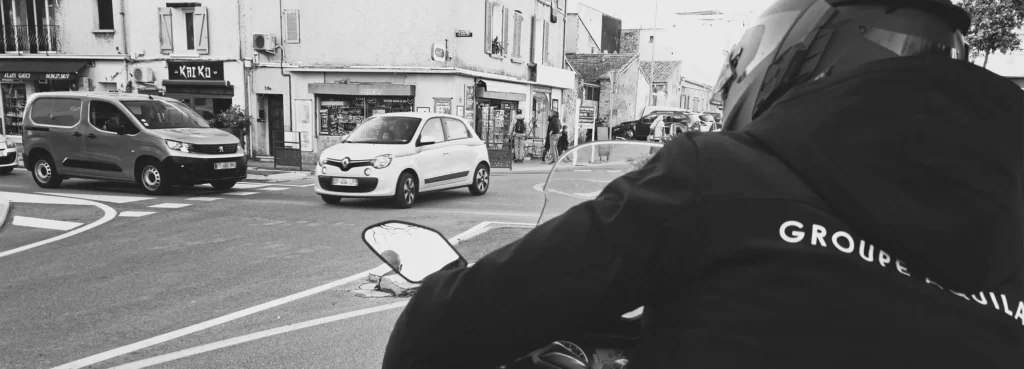
Our methodology is based on a guiding principle: proportionality of resources. Each case is investigated by applying investigative techniques in a graduated manner, from the least to the most intrusive. Open-source intelligence (OSINT) and documentary verification are undertaken first. Interviews, on-site verifications, and—only as a last resort—surveillance and tailing are used only if the previous steps have failed to establish the facts. This principle protects the privacy of the parties involved, limits costs for the client company, and strengthens the admissibility of the report.
What the Methodology Offers Managers
- Proportionality: investigative techniques are used in a graduated manner, from the least intrusive to the most intrusive.
- Predictability: a turnaround time that is announced and met, with a maximum of two weeks.
- Traceability: Each audit is dated, geolocated, and enforceable in the event of a dispute.
- Consistency: A case is handled the same way regardless of which case manager is assigned to it.
- Admissibility: a report drafted to withstand legal scrutiny.
- Budgetary discipline: no disproportionate allocation of resources relative to the importance of the issue.
The Five Steps of the Aquila Methodology’
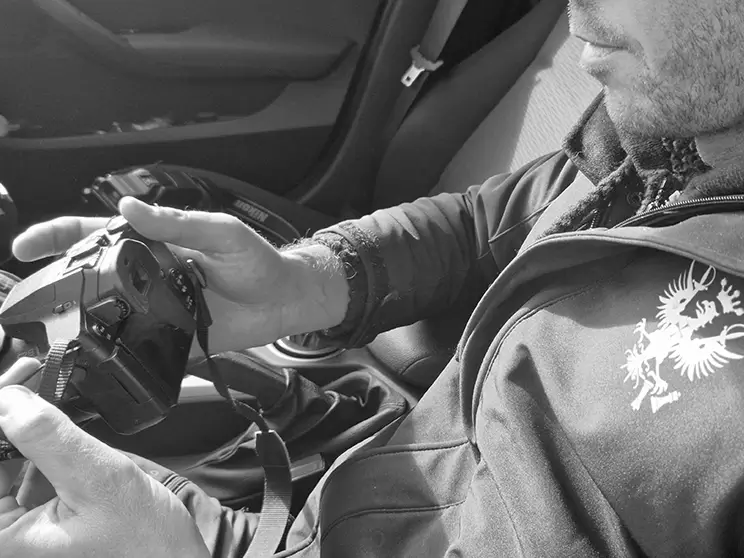
Our methodology consists of five management phases (referral, investigation, deployment, operation, and reporting) with a gradual progression of investigative techniques, from the least intrusive to the most intrusive.
Step 1 — Case Initiation: The manager makes initial contact, evaluates the opportunity, and forwards the engagement letter and case documents.
Step 2 — Review: In-depth analysis over two business days, identification of priority areas, and prioritization of the techniques to be used in accordance with the principle of proportionality.
Step 3 — Phased Deployment: Implement investigative techniques in order, starting with the least intrusive (OSINT, document verification) and progressing to the most intrusive (surveillance, tailing) if necessary.
Step 4 — Analysis: Comparing the collected data with the initial statements, identifying discrepancies, and verifying the internal consistency of the file.
Step 5 — Reporting: Drafting of a detailed report, internal approval, and submission to the manager within two weeks at most, electronically signed by the division director.
No steps are condensed or omitted. No more intrusive techniques are used if a less intrusive technique has already established the facts.
ANONYMIZED CASE STUDY
Applying the Six Levels to
a personal auto insurance claim
In a personal injury auto case involving significant litigation stakes (six-figure settlements before the civil court), the firm applied a phased approach. LEVEL 1 (OSINT): Google Street View searches revealed that the images cited by the plaintiff’s counsel depicted an intersection distinct from the actual location. LEVEL 2 (documentary evidence): discrepancy between the fire department’s report (250 cm³ motocross bike without a license plate) and the expert report submitted (registered 50 cm³ moped). LEVEL 3 (official agencies): contact with the police station regarding the status of the criminal proceedings. LEVEL 4 (remote interviews): three consistent statements under Article 202 of the Code of Civil Procedure were obtained (driver, passenger-witness, fire department incident commander). LEVEL 5 (field): visit to the scene with the driver, on-site interview, time-stamped photographs documenting the absence of the cited traffic sign. LEVEL 6 (surveillance, tailing): NOT CONDUCTED. Since Levels 1 through 5 had established the facts, any further intrusion was neither necessary nor proportionate. Mission completed in thirteen days; forty-six-page report with nine appendices.
The six levels of investigation, from least to most intrusive
The phased deployment follows this sequence. Each level is activated only if the previous one was insufficient to establish the facts.
01
OSINT
OSINT (open-source intelligence): Google Street View, public sources, and social media, in compliance with the GDPR. This often makes it possible to assess the reliability of the opposing party’s evidence without any intrusion.
02
Audits
Documentary reviews: in-depth review of the documents in the file, cross-checking with previous statements, and verification of available background information.
03
Contact
Contacts with official agencies: fire departments, police stations, city halls—to obtain official documents and verify related procedures.
04
Hearings
Remote hearings: telephone contact with the parties and witnesses, written correspondence, and collection of affidavits under Article 202 of the Code of Civil Procedure (CERFA 11527*03).
05
Audits
On-site inspections and on-site interviews: site visits, physical findings documented with photographs and geotagged, and interviews with the parties involved at the scene of the incident.
06
Monitoring
Surveillance and tailing: observations conducted strictly within the legal framework and in public spaces, used only as a last resort.
Our AFNOR pre-certification guarantees traceability and rigor at every stage.
Why our methodology
makes the difference
This five-step methodology is not merely an administrative formality: it determines the report’s value in the event of a dispute. The traceability of the due diligence procedures, the systematic dating of findings, and the rigorous classification of discrepancies ensure that the report can be submitted in court without risk of being dismissed.
Victor de Villeblanche, the division director, personally oversees every step of the process and signs off on the final report. This direct involvement ensures consistent quality across all cases, regardless of which claims adjuster handles the case or the region where the incident occurred.
The methodology is documented in an internal quality manual, which is audited as part of the AFNOR process. This formalization has a practical benefit: it enables new staff members at the firm to become operational quickly and in accordance with the same standards as experienced staff members.
- AFNOR pre-certification for methodological traceability.
- ALFA Membership: Compliance with industry standards for insurance investigations.
- Guaranteed return period: two weeks maximum.
- Supervision and preparation of the report by the division director for each case.
- A formalized and audited internal quality manual.
ALFA sets the methodological standards for insurance surveys.
To submit a case to the firm, please use our form for case managers.
no obligation
Request your free quote
Frequently Asked Questions
Yes, without exception. Regardless of the type of claim—automobile, property damage, liability, personal insurance, or organized fraud—the five-step methodology systematically structures the response.
A maximum of two weeks between the company’s submission of the complete file and the delivery of the report. For urgent cases—such as those nearing the statute of limitations or with a scheduled hearing—priority processing can be arranged.
Yes. This is complemented by the involvement of our CII partner network (50+ countries) during the field deployment phase. The deliverables remain in compliance with French standards.
The report documents the lack of evidence. For the company, it is a useful deliverable: it allows the case to be closed while minimizing the risk of future litigation. The report is not a commercial end in itself; it is an objective assessment.
Victor de Villeblanche, director of the Insurance Investigation Division, personally drafts each report. This assurance of editorial consistency is part of the firm’s commitment to its clients.
Check out all our insurance claims sections





Be sure to check out our section on TSCM detection – Electronic dust removal for the detection of bugs and cameras, as well as ourOSINT digital investigation.