



Detection Section (TSCM)
Detection of GPS Beacons on Vehicles and Yachts
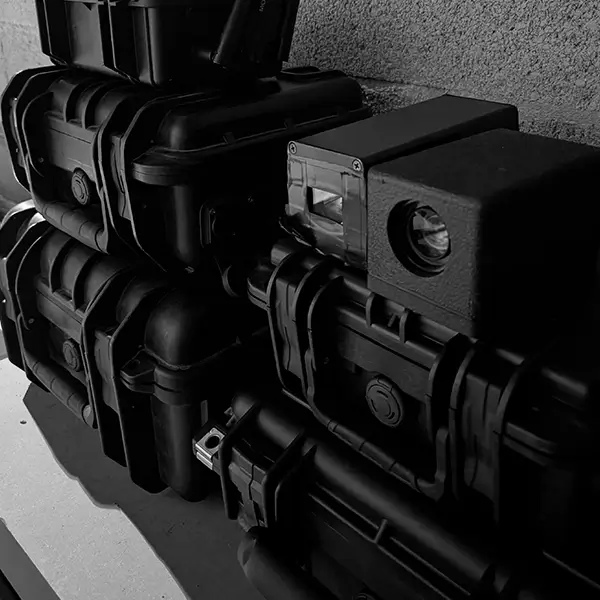
Being followed without one's knowledge
A magnetic GPS tracker can be attached to the underside of a vehicle’s chassis in just a few seconds. About the size of a matchbox and with a battery life of several weeks, it transmits a vehicle’s location in real time to the person who installed it. Knowing where you are, at what time, and at whose house: this is the information sought by a suspicious spouse, a competitor, an adversary in a legal dispute, or anyone with malicious intent.
Executives, public figures, and wealthy families are prime targets for this type of tracking, but no one is truly safe if their vehicle is regularly parked in public places.
The risk isn’t limited to the workplace. The interiors of company cars, chauffeur-driven limousines, yachts, and private jets are also places where sensitive conversations take place—and where a hidden microphone becomes particularly valuable. These spaces, which are often overlooked during a security audit, deserve the same level of vigilance as an office or a home.
A typical example: a person going through a divorce notices that their spouse knows their whereabouts with unsettling precision. The simplest explanation is often a tracking device hidden under the vehicle. Similarly, an executive may be tracked to identify their meetings, business partners, or negotiation locations. One factor complicates detection: a tracking device may transmit only intermittently to conserve battery life, or it may be placed and then removed between trips. It is precisely this stealthy nature that justifies a professional search: a spectrum sweep and a check with a nonlinear junction detector can locate a device that is invisible to the naked eye and would be missed during a simple visual inspection.
What Onboard Detection Includes
Our detection service—TSCM, which stands for Technical Surveillance Counter-Measures—covers all types of sensitive transportation: personal and company cars, limousines, executive vehicles, yachts and private boats, and business jets.
We are primarily looking for GPS trackers and transmitters—whether magnetic or connected to the vehicle’s power supply—as well as onboard microphones and, where applicable, hidden cameras inside the vehicle. This list is not exhaustive.
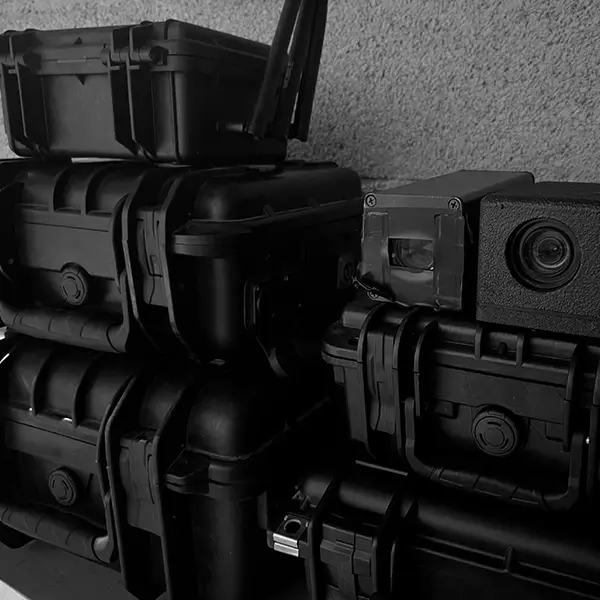
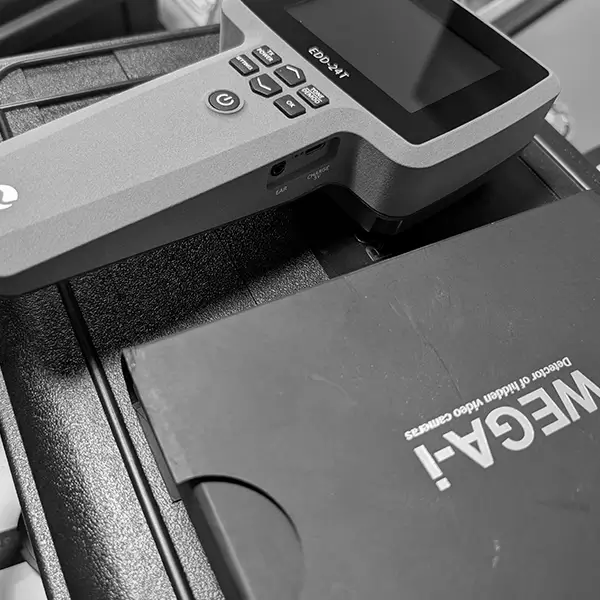
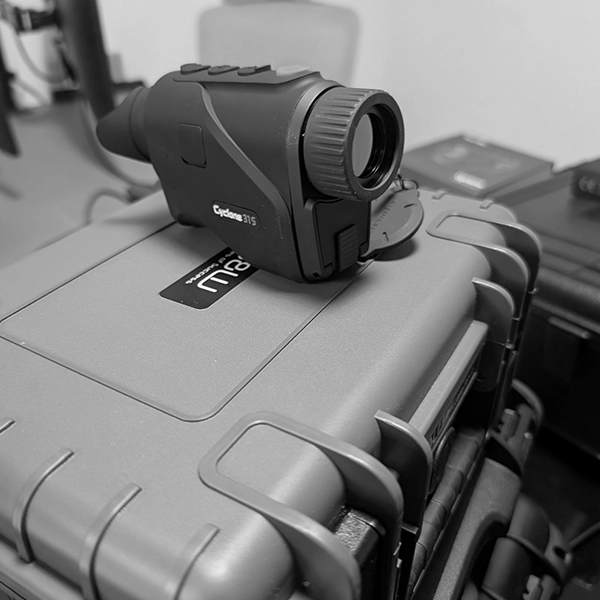
The inspection uses professional equipment equivalent to that used by government agencies: a spectrum analyzer for radio emissions, nonlinear junction detectors (NLJDs) to locate electronic devices even when inactive, and a thorough physical inspection of typical hiding spots—wheel wells, bumpers, underbody, wiring harnesses, and the passenger compartment. On a yacht, the search extends to living areas, the helm, and the cabins.
Because a device can be reinstalled after an initial inspection, a one-time check is only valid at the time it is performed. For profiles that are regularly exposed, periodic vehicle inspections are the most effective solution: they serve as both a deterrent and a reassurance. We tailor the frequency to your level of risk.
After the inspection, you will receive a report detailing our findings. We maintain complete confidentiality, and our recommendations take into account your actual use of the vehicle or boat.
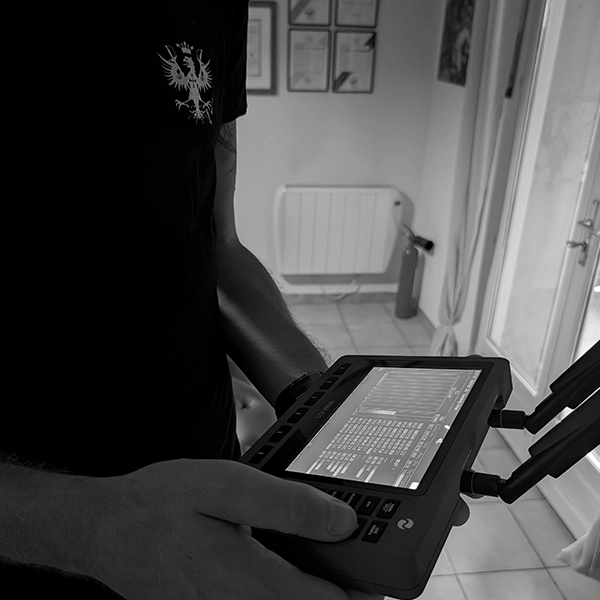
Step-by-Step Guide to a Typical Intervention
After an initial confidential discussion to understand your situation, we’ll arrange a discreet time and place to work on the vehicle(s) in question. On site, the technician conducts a systematic search: identifying suspicious emissions using a spectrum analyzer, scanning areas of interest with an NLJD, and physically inspecting the typical mounting points for a tracking device. For a boat, the inspection is tailored to the specific conditions of the location. Upon completion, we will provide you with a report detailing our findings and, if a tracking device is found, our recommendations on how to proceed.
Why Choose the Aquila Group
The Aquila Group is a private detective agency licensed by the CNAPS. On-site detection requires in-depth knowledge of the locations where tracking devices are deployed: this is one of the areas of expertise of our Detection Division, led by Igor Defosse, the firm’s TSCM technical advisor since 2021 and a graduate of IFAR. Explore our full range of detection expertise on our website.
Beyond this service, the Aquila Group is a well-structured firm, organized into several areas of expertise and with a network of offices throughout France. This structure allows us to respond quickly anywhere in the country, while maintaining the same high standards of methodology from one assignment to the next. Our operators are equipped with professional gear that is regularly updated, in strict compliance with the legal framework governing our profession.
For us, discretion is not a sales pitch, but a prerequisite for effectiveness: if the person behind a potential surveillance operation learns that an investigation is underway, they may remove their equipment before we arrive. That is why we organize every operation to ensure it remains undetected, and why our communications remain confidential, from the initial contact through the delivery of the report.
We operate throughout France, with strong demand in the Paris region and along the coast for recreational watercraft. Discretion and confidentiality regarding our findings are at the heart of our approach. To describe your situation to us, please contact our teams.
no obligation
Request your free quote
Vehicles and Yachts: Frequently Asked Questions
Generally, one to two hours for a car, and longer for a yacht or multiple vehicles. We’ll provide a more precise estimate after the initial consultation.
Yes. We’ll work with you to choose a location and time that won’t attract attention. Confidentiality is guaranteed from the very first contact.
Primarily GPS trackers and transmitters—whether magnetic or wired—as well as onboard microphones and cameras, whether they transmit continuously or intermittently.
We document the discovery and advise you on the next steps. Depending on the circumstances, the findings may serve as the starting point for legal action, which we will help you prepare.
Yes, it is perfectly legal on a vehicle that you own or have the right to use. The possession of detection equipment is governed by Article R226-7 of the Penal Code, in accordance with <a href=”https://www.cnaps.interieur.gouv.fr/”>the Internal Security Code</a>.
Check out all our sections on investigations for detecting hidden microphones and cameras
Be sure to check out ourinsurance investigations as well as ourOSINT digital investigations.
Need a private investigator in France? Our investigations are designed to meet the needs of both individuals and businesses.